January 20 - 27, 2000

Human rights
Food vs. freedom
by Michelle Chihara
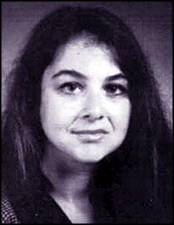
High in the Andes, an MIT graduate has stopped consuming solid foods to protest her continuing imprisonment in a Peruvian prison. This month marks the beginning of Lori Berenson's fifth year of incarceration under what have repeatedly been described as brutal conditions.
In 1996, the Peruvian government accused Berenson of "treason," and of participating in a terrorist conspiracy to overthrow the Peruvian congress. She was sentenced by a hooded military tribunal to life in prison, and was not given an opportunity to respond to the charges brought against her.
Berenson may have sympathized with some of the goals of the Tupac Amaru Revolutionary Movement, a violent leftist guerrilla group. But she has stated her dedication to human-rights causes, and she maintains that she is innocent of any crimes, especially violent ones.
Although the closed nature of the trial has made it impossible for outside and international parties to verify the Peruvian government's evidence, some of the claims have already proven false. Human-rights organizations including Amnesty International and the United Nations High Commission on Human Rights have declared Berenson a victim of wrongful imprisonment. The State Department, the American ambassador to Peru, and the US Congress continue to pressure Peruvian president Alberto Fujimori to provide an open, civilian trial for Berenson.
"She's been in some of the worst prison conditions," says Joanne Mariner, deputy director for the Americas at Human Rights Watch, a nonprofit human-rights organization. And Berenson is not alone. The military tribunal that convicted her was created as a tool to rescue a country that was increasingly threatened by terrorist violence from guerrilla groups such as the Shining Path. But although Fujimori initially was hailed for bringing the violence under control, it has now become clear that the anonymous tribunals got out of hand.
"The ad hoc commission in Peru charged with reviewing these kinds of convictions -- the people convicted unfairly by these tribunals have been called the Innocents -- was just disbanded in December," says Mariner. "That was one of the few existing forums for any kind of improvement in the chronic problem of a lack of due process. Lori is prominent because she's American, but many people have suffered unfair imprisonment."
According to the Web site dedicated to "the Committee to Free Lori Berenson," Peruvian doctors told the State Department that she was in good health, "but weakened," after of the first four days of her strike, which began January 11. For further information, and to follow the outcome of Berenson's strike, go to http://www.freelori.org.