March 23 - 30, 2000

Q&A
An urban environmentalist
by Ben Geman
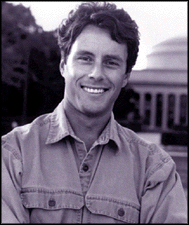
Environmental attorney William Shutkin sounds fairly laid-back when you talk to him, but don't be fooled: his new book, The Land That Could Be: Environmentalism and Democracy in the Twenty-First Century (MIT Press), is a call to arms. Shutkin writes that environmentalism must move forward to encompass participatory principles and green urban development. Vital democracies and healthy ecosystems, he argues, are inseparable.
Shutkin co-founded the Roxbury environmental-justice group Alternatives for Community and Environment and now heads the Cambridge-based New Ecology, Inc., a nonprofit group that promotes sustainable economic development for cities. He spoke with the Phoenix about his new book.
Q: You write that traditional environmentalism is too limited. What do you mean?
A: Environmentalists . . . have tended to focus on places where people don't live. Monumental natural areas, wilderness areas and parks, the wonderful places we are all proud of and that constitute a very large part of our national ecology. But I think to some extent that focus has come at the expense of our urban areas -- especially places where people of color live, lower-income people. I think to that extent the movement has really turned a blind eye toward those places and those people [at] the most risk from environmental harm.
Q: You advocate something called "civic environmentalism," which is already happening in some places. What is that?
A: Civic environmentalism is essentially environmentalism by a new name. It's moving beyond the traditional realm of environmentalism, moving beyond the focus on natural resources and law and policy to more locally based, locally crafted solutions that really rely ultimately on the civic will, with the laws and policy thrown in.
Q: I understand we have an example of civic environmentalism in Roxbury.
A: Indeed. In Roxbury, the Dudley Street Neighborhood Initiative for well over a decade has been dealing with massive environmental assaults -- from poor air quality to brownfield [or contaminated] sites and everything in between -- with very little help from environmentalists and environmental laws and policy. DSNI, through a multi-year planning process, has identified brownfield sites as really the key to the future social and economic preservation of the neighborhood. They've realized this because so much of the land in their community, if properly cleaned up, could be turned into space with material value for food production.
Q: So civic environmentalism encompasses things that don't traditionally fall into the realm of environmentalism, such as economic development and commerce.
A: Exactly. What civic environmentalism is trying to do is put a proactive face on environmental action. It is not an accident that so many of our leading environmental groups, as effective and successful as they have been, have the word "defense" in their titles. That's an important role, no doubt, but . . . there is only so much defending we can do. What I argue is that what environmentalists need is to mold the economy in their own image. Economic development and environmental protection are not mutually exclusive. We've got to move environmentalism away from a purely defensive posture to a proactive, pro-development posture and take advantage of some of the environmental initiatives out there -- [on issues] like brownfields, like green development -- that really engage people at the local level who ultimately have to earn a living, who have got to have a job, in the process of building a new economy.
William Shutkin will be speaking at Harvard University's Longfellow Hall at 6 p.m. on April 3. Call (617) 661-1515.