September 7 - 14, 2000

Sox support weakens, continued
by Ben Geman
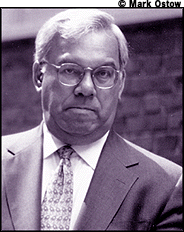
Tom Menino opposes Governor Paul Cellucci's plan to roll back the state income tax by nearly a point, to five percent. With his political base, he is in a unique position to influence the debate and, more important, to turn the vote against a tax-cut ballot referendum on Election Day. But how far will he go to defeat the scheme?
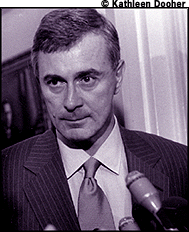
The rollback campaign -- and the fight against it -- will heat up as election season gets under way, giving Menino an opportunity to defeat Cellucci's plan. In a way, it's a second chance for the mayor, who endorsed Democratic gubernatorial candidate Scott Harshbarger in 1998 but didn't exactly pull out all the stops to help him defeat Cellucci. He's been paying for it ever since.
The governor recently slashed more than $2 million in funding from a jobs program for city teens. What's more, in a move that irked the mayor and other education advocates, Cellucci vetoed $13 million in Chapter 636 education funds -- of which $5.2 million was slated for Boston -- that could have gone toward arts programs, parent information centers, and school supplies.
But even that kind of slap is probably a mere preview of what's ahead if Cellucci succeeds in his campaign to roll back the income tax. Cellucci has virtually staked his governorship's shaky legacy on the question's passage in November. If the measure succeeds, it will eventually cost the state about $1.2 billion per year in revenues. That would be bad news for Boston, a city that gets nearly a third of its $1.7 billion budget from state funds. And Menino knows it. In fact, earlier this year he introduced a motion formally opposing the tax cut before the Massachusetts Mayors' Association (it passed unanimously). But if Menino really is serious about fighting Cellucci's tax plan and saving city funding, he can best show it as the campaign heats up.
City advocates say slashing the tax is bad public policy that could hamstring the state's efforts to maintain services, let alone to expand investment in education, infrastructure, and other needs. Asked what the tax cut would mean for cities and towns, Patricia Mikes of the Massachusetts Municipal Association says flatly: "It would probably be devastating."
Jim St. George, executive director of the Tax Equity Alliance for Massachusetts, a progressive policy group leading the fight against the tax rollback, says Menino is potentially an important, powerful, and credible ally in the anti-tax-cut fight. When Menino argues that Boston needs strong schools and other services to continue to thrive, says St. George, "I think that people will believe it and that will be a very key part of the campaign."
Menino's support is "crucial," he adds: "He would be a key piece of the puzzle in explaining to people why something that sounds like a good idea in fact isn't."
For now, Menino vows to fight against the cut. "I'll be out there like I was early on," Menino says, referring to the Massachusetts Mayors' Association resolution. "I'll do everything I can. It's too important to us." If nothing else, Menino indicates that these days he's not afraid to hit Cellucci head-on. "He's rolling back taxes on one hand to be the hero, but on the other hand he vetoes Chapter 636 funds," he says, challenging Cellucci's education commitment.
But City Hall insiders say it hasn't been decided yet what his level of involvement in the anti-tax-cut movement will be. There's certainly a lot going on at City Hall this fall to compete for his attention: the mayor is pushing a Red Sox plan for a new stadium, and city officials are working to get the city's ambitious but troubled housing agenda back on track. Waterfront development continues to be a priority. Opponents of the rollback plan will need all the help they can get, though -- a poll commissioned by the Boston Herald released last week showed that the measure would win more than 70 percent of the vote.