The Boston Phoenix November 2 - 9, 2000

Picking referendums
Ballot initiative endorsements
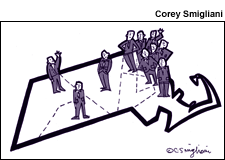
Question 1. The Phoenix recommends a yes vote. If approved, this measure would amend the Massachusetts Constitution so that the redistricting process, which occurs after every census, would proceed faster. Specifically, Massachusetts's redistricting would occur in 2002, when US Census data will be available, instead of at its currently scheduled time in 2004. This measure has already been unanimously approved by the state legislature in two separate terms.
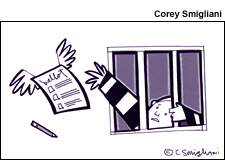
Question 2. The Phoenix recommends a no vote. If approved, this measure would amend the Massachusetts Constitution so that incarcerated felons would be prohibited from voting in 11 specific elections: those for governor, lieutenant governor, attorney general, state treasurer, state auditor, secretary of state, state representative, state senator, governor's councilor, US senator, and US representative. Currently, Massachusetts is one of only three states that let inmates vote. Even if this measure passes, prisoners will still be able to vote for any office outside the 11 specified in the Massachusetts Constitution, including president, vice-president, county sheriff, mayor, and city councilor. This means that if Question 2 passes, it will pose an administrative nightmare for municipal officials, who will have to prepare separate ballots for prisoners that don't include the 11 offices named above.
This measure is rooted in a petty act by Governor Paul Cellucci, who in 1997 filed an executive order banning prisoners from forming political-action committees; he did this after Joseph Labriola, a convicted murderer serving a life sentence, formed the Massachusetts Prisoners Association to lobby for better prison conditions. As a result of the executive order, Department of Correction officials searched prisoners' cells for political literature, which is now considered contraband. In other words, this ballot question isn't rooted in deeply held philosophical beliefs about who should be allowed the privilege of voting or what constitutes appropriate retribution for the commission ofcrimes. It is instead rooted in a pathetic attempt to look tough on crime. In the past decade, Massachusetts has moved from a prison policy aimed at rehabilitation to one aimed at retribution. Given that 97 percent of Massachusetts inmates will eventually return to society, shouldn't we encourage them to maintain connections to the outside world? If an inmate cares enough about public affairs to vote, he or she should be encouraged to do so. Taking part in the political system could be an important part of re-entry into society.
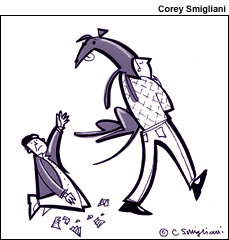
Question 3. The Phoenix recommends a no vote. If approved, this measure would ban dog racing in Massachusetts. On the surface, Question 3 seems like an easy way to end animal abuse. But it isn't. The tracks in Revere and Raynham-Taunton are just two stops on the national greyhound-racing circuit. And by all accounts, dog abuse doesn't take place in Massachusetts, where the sport is heavily regulated. So approving Question 3 will not end the abuse of greyhounds that does, by many accounts, take place in other states. No one, anywhere, should countenance cruelty to animals, but there is something incredibly disturbing and distasteful about activists' using propaganda drawn from abuses at out-of-state tracks to pass a measure that will close the two dog tracks in Massachusetts and throw 1200 people out of work.
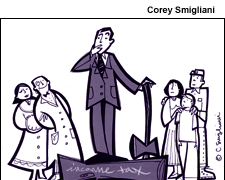
Question 4. The Phoenix recommends a no vote. If approved, this measure would roll back, over three years, the state's income tax from 5.85 percent to five percent. Proponents of the ballot question say that thestate must keep a pledge -- made in 1989, when the tax was increased -- that the hike would be temporary. Indeed, such a promise was made to voters --although it wasn't written into law. Unfortunately, former governor William Weld and then-lieutenant governor Paul Cellucci, aided and abetted by the Democratic leadership on Beacon Hill, have already given the money back -- but not to us. In the mid 1990s, state leaders gave away about $1 billion in tax breaks to Raytheon and Fidelity and cuts in the estate and capital-gains taxes. Governor Cellucci, who has staked a good chunk of his gubernatorial legacy onthis measure, says that government should keep its promises. Generally, we agree; but the problem is that our state government can't afford to give back another $1 billion -- which is what this tax cut would cost. Our state surplus is needed to fund everything from Big Dig overruns (currently about $1.4 billion) to strapped human-services programs. If Cellucci wants to keep the government's promise, he should take back the money he gave away in the form of corporate welfare and promised treats for the likes of the Red Sox, and then give it back to the working people of Massachusetts.
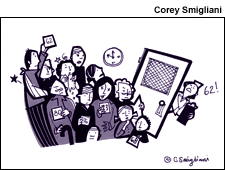
Question 5. The Phoenix recommends a no vote. This measure, if passed, would mandate universal health-care coverage in Massachusetts. Although that's an appealing prospect, it's important to remember that the proponents of Question 5 used this ballot question as a sledgehammer with which to extract a patients' bill of rights from the legislature -- a bill that imposes stricter controls on HMOs. Although the advocates promised to withdraw the question after the patients' bill of rights passed, it was too late, according to state law, to remove it from the ballot. So the referendum remains. Question 5 is a hugely complicated measure that, while admirable in its intent, would cost the state billions of dollars over the next few years and further complicate an already messy system. In addition,the nonpartisan Massachusetts Taxpayers Foundation says the measure would drive insurance rates through the roof. There's no question that we need health-care reform in this country, but Question 5 isn't the way to achieve it. Government by complex, poorly understood referendums is always a bad idea, and there is no better example than this measure.
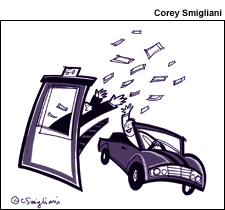
Question 6. The Phoenix recommends a no vote. This measure, if passed, would provide a dollar-for-dollar rebate of highway tolls.(The Massachusetts Constitution does not allow for the outright abolition oftolls.) This is a terrible idea. Tolls are a user fee paid directly by people who choose to drive. As such, these fees are something we ought to support. They also help the environment by providing an incentive for people to take public transportation instead of driving. The idea behind this measure is that the Massachusetts Turnpike was paid for a long time ago, and thus should no longer be collecting tolls. But highway construction continues in this state, and the ability to levy tolls is crucial to help pay for Big Dig overruns. There is also little doubt that if this were to pass, the legislature would have to find the funds elsewhere -- for example, in a general gas-tax increase, which then would force even drivers who don't use toll roads to pay.
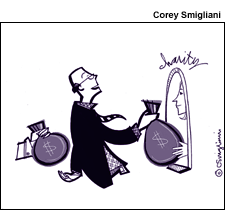
Question 7. The Phoenix recommends a yes vote. This measure, if passed, would simply express support for a state law that was passed by the legislature in July. That law allows for the creation of a state tax deduction for charitable donations. Forty-two other states already have such deductions. One of the arguments against this provision is that it couldd ramatically affect the amount of money the state collects in taxes. That could happen if people were allowed a dollar-for-dollar deduction on the amount of tax owed. But this measure is modeled after the federal charitable deduction, which simply reduces the amount of income on which tax is owed. Massachusetts ranks last in the nation for charitable giving, according to a recent survey by the Urban Institute's National Center for Charitable Statistics; clearly, BayStaters could use some incentive to give.
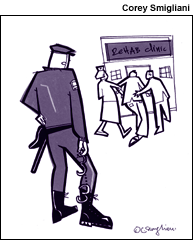
Question 8. The Phoenix recommends a yes vote. This measure, if passed, would make it harder for law-enforcement officials and prosecutors to seize property from accused drug offenders and use the proceeds to supplement their own budgets. It would also make it easier for judges to sentence drug offenders to treatment rather than jail -- something that would really help mitigate drug dealing and use. All the state's district attorneys, Governor Cellucci, and Attorney General Tom Reilly are opposed to the measure. They seem to think the state's war on drugs is working. It isn't. The state's prison population now hovers around 20,000. This is due, in large part, to prosecutorial overcharging of the accused and to mandatory-minimum sentencing requirements for drug offenders. The state should be making it easier, not harder, to get treatment for drug addiction. And it's time we outlawed the practice of allowing law-enforcement officials to seize for their own benefit the property of those who are only accused -- as opposed to those who have been found guilty.
What do you think? Send an e-mail to letters[a]phx.com.
