May 4 - 11, 2000

Activism
Police set caged-in demonstrators free
by Kristen Lombardi
Local animal-rights activists now know what it feels like to get snagged.
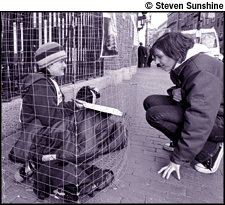
On the evening of April 26, Cambridge police ordered activists from the Animal Defense League (ADL) who were protesting animal experimentation by Harvard University (see "Monkey Business," This Just In, April 28) to shut down their cage-in demonstration in Harvard Square.
Four activists from the ADL had planned to spend the whole week in cages -- outside, on Mass Ave -- to call attention to the monkey research conducted at Harvard University's New England Regional Primate Research Center in Southborough.
But after just 48 hours, they were forced to dismantle the makeshift confines because they had failed to obtain a permit. This has the activists charging that city officials reneged on past statements.
"We were told the cages wouldn't be a problem," says Danielle Tessier, an ADL member, "but we had to take them down."
According to Tessier, ADL members had gone to City Hall days before the scheduled cage-in to inquire about permits. They were sent from one department to another and eventually landed in construction inspector Robert Patterson's office. Tessier says the activists asked Patterson what their "right to a public way" would be if they staged a protest across from Au Bon Pain on Mass Ave. She says he told them they'd be okay if they weren't "obstructing half the width of the sidewalk."
Days later, though, Patterson spotted the 100-hour cage-in operation in action. Approaching the spectacle, he saw a note that listed his name as someone to call if protesters ran up against trouble. "He saw his name and got upset," says Tessier, one of 12 activists who were keeping the cage-in volunteers company. Patterson contacted the police, who shut down the action.
Patterson says members of the ADL did ask him about protesting on Mass Ave, but they "wouldn't tell me what they were doing exactly." If he'd known they were building three-by-five-by-three-foot cages, he adds, he would've told them to apply for a permit.
Despite the permit flap, ADL activists continued their weeklong demonstration sans cages. But the lackluster cageless version didn't lure people to the cause, nor did it brighten activists' spirits. "This makes me very reluctant to do anything in Cambridge again," Tessier concludes.
Which would probably be just fine with Harvard.